

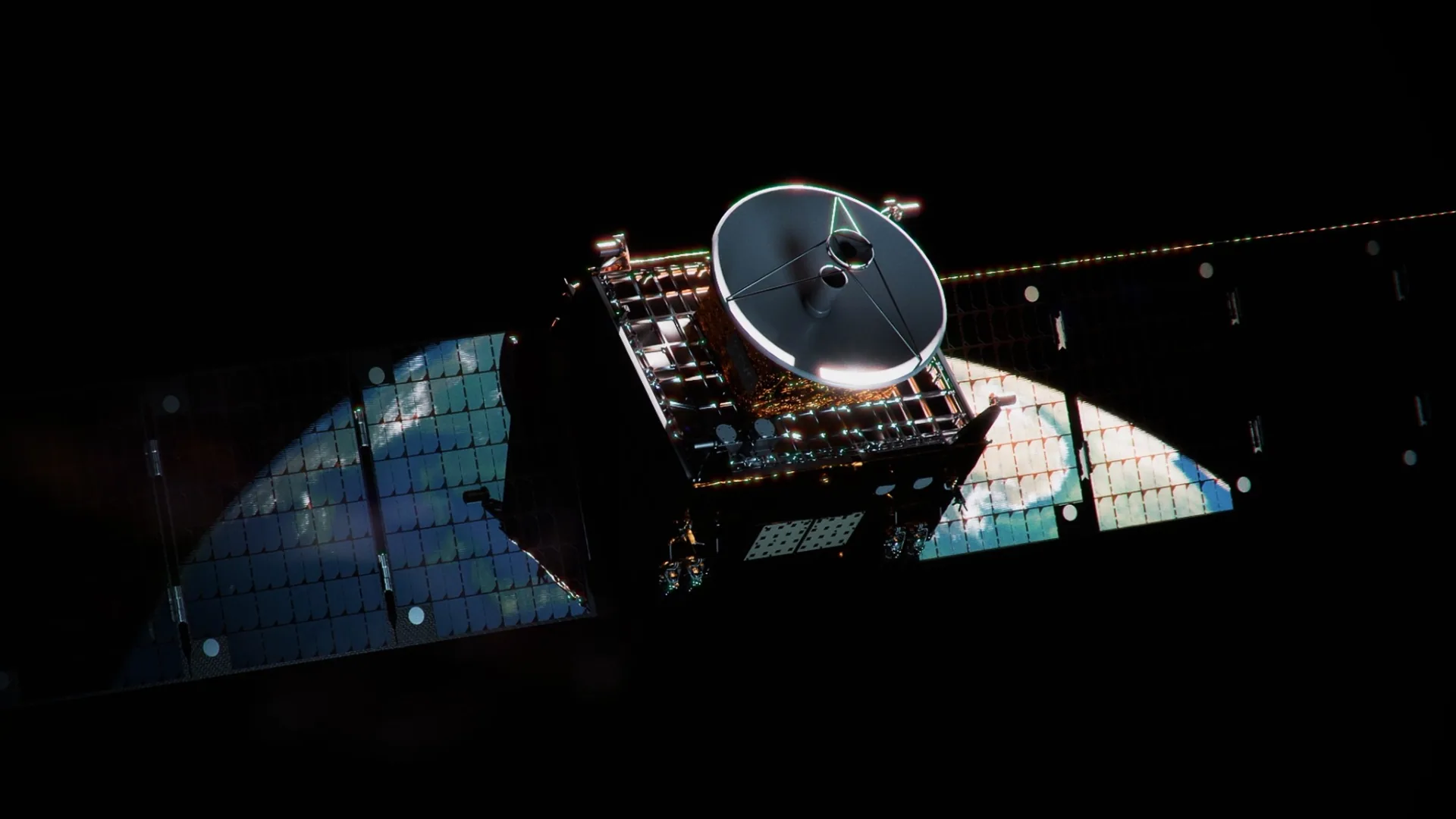
Protecting Europe in orbit.
European satellites now operate in an environment where they are watched, approached and interfered with as a matter of routine. And yet Europe still has no operational means of its own to respond directly in orbit. IBEX is our European made, in-space mobility answer to that gap.
From an anecdote to a pattern
In September 2018, the French defence minister Florence Parly disclosed that a Russian satellite called Luch-Olymp had drifted so close to the French-Italian military satellite Athena-Fidus that "we might have imagined it was trying to intercept our communications." At the time it read almost like an anecdote, but seen from late 2026, it was the first public sign of a pattern.In September 2025, German defence minister Boris Pistorius told a space conference in Berlin that two Luch-Olymp satellites were tracking Intelsat spacecraft used by the Bundeswehr, adding that such systems can "jam, blind, manipulate, or kinetically disrupt satellites." A few weeks later, the head of UK Space Command, Major General Paul Tedman, told that Russian satellites carrying payloads able to observe British ones were collecting information on them. In mid-October 2026, the pattern reached another satellite built in Europe: Russia’s Cosmos 2612 loitered within roughly metres of ICEYE-X36, a Finnish-built radar satellite. Its operator could only say it was “aware of the situation and tracking it closely.”These actions may have direct consequences on the ground, because the services carried by satellites are the ones everyday life quietly depends on: from the timing signals behind payments and power grids to the communications used by emergency services and armed forces.
Predictable by design
Most satellites, including military and dual-use ones, were designed for a more peaceful era, following orbits that anyone can predict days in advance.This is not true anymore for USA, China and Russia-operated assets, where in-space mobility is becoming the new standard. In January 2022, China's Shijian-21 docked with a defunct BeiDou navigation satellite and towed it to a graveyard orbit above the geostationary belt. In 2025 Shijian-25 docked with Shijian-21 in what was widely reported as an in-orbit refuelling test. The Center for Strategic and International Studies, in its Space Threat Assessment 2025, credits both China and Russia with co-orbital capabilities, which is to say spacecraft able to approach, inspect and act on other spacecraft, with or without consent.Finally, in September 2026, US Air Force Secretary Troy Meink confirmed publicly that the United States now has “space control weapons” on orbit, “capable of defending the joint force against hostile adversary action”. On the other side of the planet, Europe still watches from the ground its vulnerable static satellites.
A gap Europe has named but not yet closed
France has announced that its first patrol satellites will be deployed from 2027 to monitor and inspect threats in orbit. Germany’s first space security strategy, published in November 2025, calls for "bodyguard" satellites able to inspect adversary spacecraft, backed by €35 billion of defence space spending over 5 years. Both confirm the need but neither exists yet.Protecting a constellation spread across LEO and the geostationary belt requires vehicles produced affordably at rate, launched on European rockets and replaced when needed, so that presence becomes a standing capability rather than a one-off demonstration.
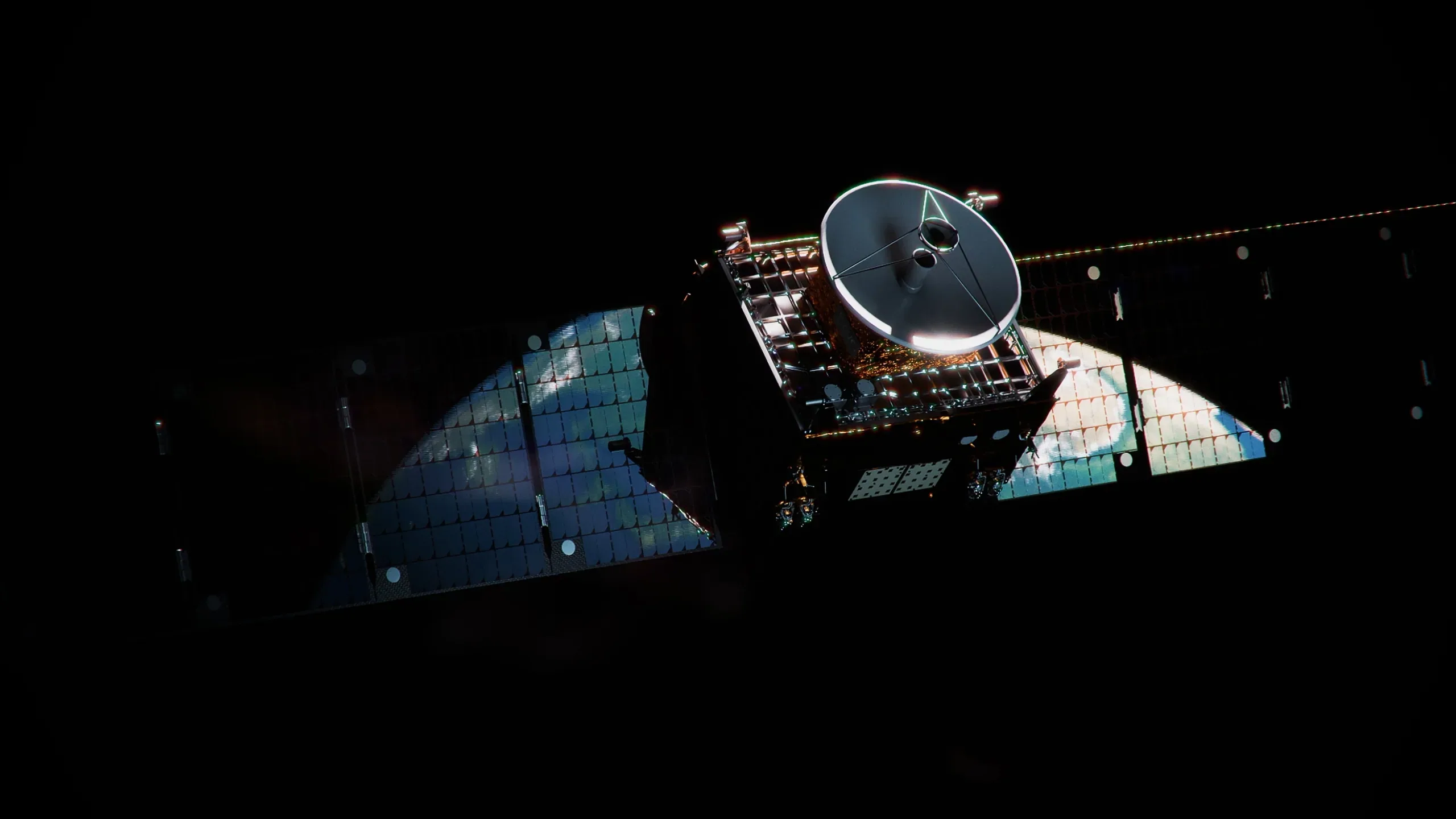
IBEX, our European answer
IBEX is a highly manoeuvrable platform, engineered in Switzerland by PAVE Space, with enough delta-v to reposition itself again and again over its life. It is payload agnostic, up to 300kg, so that the same bus can carry reconnaissance, co-orbital denial, jamming, dazzling, capture and neutralisation effectors without being redesigned for each mission. It gives European nations the ability to swiftly send a vehicle on the same orbit as a strategic asset, service it or understand what is happening around it, and respond in hours rather than months. Like our kick-stage LYOBA, IBEX runs on storable propellant, which means it can wait on station for years without boil-off and still be ready to move fast when it is needed. It is designed to be compatible with most of Europe's launchers, both those flying today and those coming online, so that putting it in orbit never depends on someone else's permission. And once paired with LYOBA, it will offer an end-to-end solution from LEO to GEO or lunar orbits in under 24 hours.
Maiden flight, in 14 months
A vehicle like this is only credible if the critical components already exist, and in our case most of them are shared with LYOBA, our kick-stage. We build the avionics and the guidance, navigation and control stack in house, because that is where proximity operations are won or lost. The core of that avionics architecture already reached orbit aboard GRAZE, our first demonstration mission, where its in-orbit test campaign is ongoing. The attitude-control thrusters that will give IBEX its fine manoeuvring are already in their 3rd iteration, each one hot-fired and redesigned on what the last one taught us.The first IBEX demonstrator just passed its Preliminary Design Review in October 2026. It is currently scheduled on a launch to Low Earth Orbit scheduled as early as February 2028, where it will fly the critical building blocks of the operational vehicle. We have also secured the launch for a second IBEX orbital mission.
We do not claim to have solved every problem that close operations in orbit will raise, and nobody honestly can. What we do claim is that Europe needs a way to look after its own assets in space, and IBEX, built alongside LYOBA, is how we intend to give it a sovereign one.