

MSc Thesis: Turbopump Shaft Seal Selection & Design
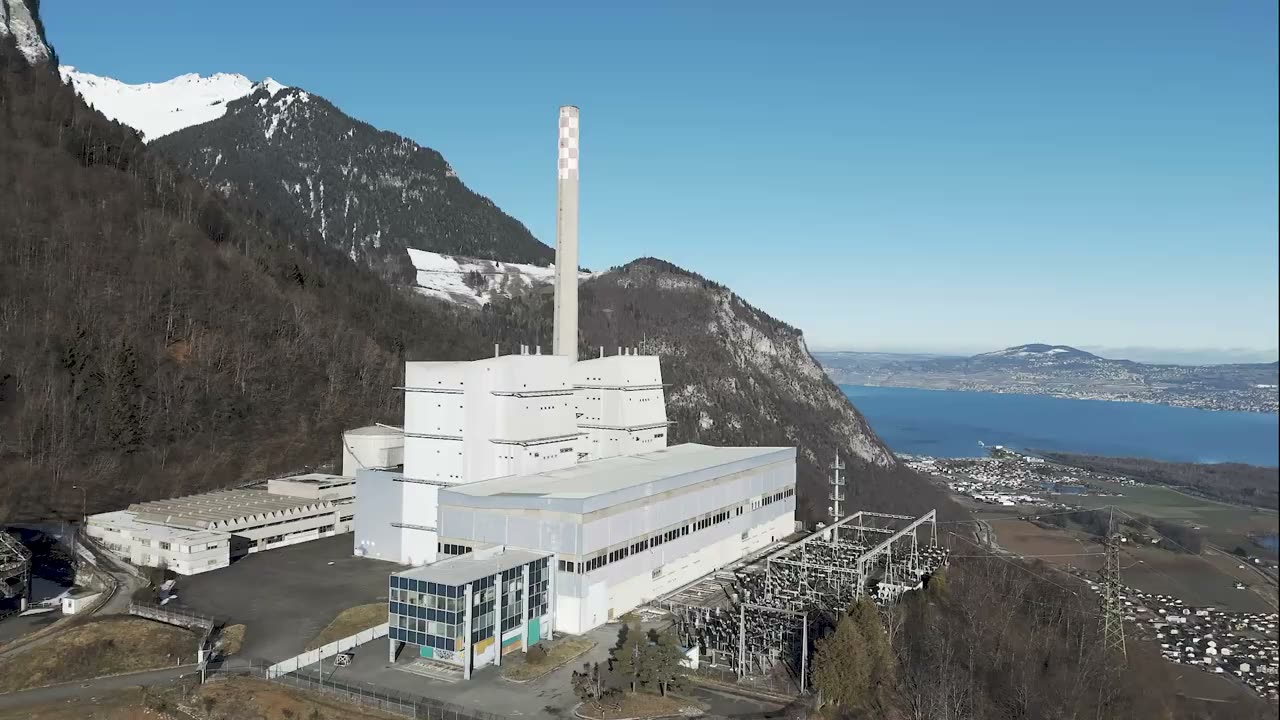
Propulsion - Villeneuve, CH
The position
- Crew
- Propulsion
- Location
- Villeneuve, CH
- Type of contract
- Master Thesis
Your role
Separating high-pressure propellants from bearings and hot turbine gases inside a turbopump is not a catalogue-selection problem. It requires a seal architecture designed around pressure, speed, leakage, materials, thermal loads and failure modes. We are looking for a MSc student who will help develop it.
PAVE Space is building LYOBA, a heavy kick stage moving payloads of up to 4 tonnes from Low Earth Orbit to high-energy orbits in under 24 hours.
So, why now?
A rocket engine turbopump assembly is currently under development. Its shaft sealing system must prevent unacceptable leakage and, critically, prevent mixing between incompatible fluids.
We need to compare and design candidate solutions such as contacting mechanical face seals, hydrostatic or hydrodynamic lift-off seals, floating-ring seals, labyrinths, slingers, purge cavities and drained multi-stage arrangements.
The outcome will directly define the turbopump layout, interfaces and development test campaign.
Duration25 weeks (standard EPFL; flexible for other universities)StartOctober 2026 (flexible)LocationVilleneuve, Switzerland — fully on-siteConfidentialityThesis is confidential and will not be publishedSupervisionIndustrial supervisor at PAVE Space; academic supervisor to be identified by the student
You will own
A literature and heritage review of dynamic shaft seals used in rocket turbopumps and comparable high-speed turbomachinery.
Definition of the sealing requirements from the turbopump operating envelope: fluids, pressures, temperatures, rotational speed, leakage limits, transient conditions and allowable interfaces.
Development of candidate seal architectures for the pump, bearing and turbine interfaces.
Trade-off studies covering mechanical face seals, lift-off seals, floating-ring seals, labyrinths, slingers, purge systems and drained multi-stage arrangements.
Sizing of the selected concepts, including face loading, pressure balance, clearances, leakage, heat generation, wear and lift-off behaviour where applicable.
Selection of compatible face, seat, bellows, spring and secondary-seal materials for each fluid environment.
Assessment of off-design and failure cases, including start-up, shutdown, loss of lift, excessive leakage, wear, contamination and rotor excursions.
Definition of the instrumentation and test campaign required to validate the selected architecture.
A final design recommendation supported by calculations, CAD models and clearly documented trade-offs.
What we are looking for
MSc student in Mechanical Engineering, Aerospace Engineering, Mechatronics or a related field.
Solid understanding of fluid mechanics, thermodynamics and mechanical design.
Ability to translate system requirements into analytical models and practical hardware.
Experience with CAD and engineering calculations.
A rigorous approach to assumptions, interfaces, failure modes and design documentation.
Autonomy to structure an open-ended engineering problem and drive it toward a defensible design decision.
Nice to have: familiarity with rotating machinery, tribology, bearings sealing technology, rotordynamics, computational fluid dynamics (CFD), finite-element analysis (FEA), Python or MATLAB.
You will fit if
You want your thesis to become flight hardware, not remain a theoretical study.
You enjoy problems where fluids, materials, thermal behaviour and mechanical design interact.
You are comfortable comparing several architectures before committing to one.
You question assumptions and validate calculations against testable evidence.
You would rather work alongside engineers building and testing hardware than inside an isolated academic project.
You are looking for a technical challenge from which you will learn a lot about engineering in extreme environments.
This is a confidential thesis conducted fully on-site in Villeneuve (VD), where the turbopump team and development hardware are located. The student must identify an academic supervisor.
The work is early-stage and design-intensive. Some requirements will evolve as the turbopump architecture matures. The student will be expected to manage these interfaces, document assumptions and progressively converge on a testable seal design.
We are building to ship, grounded in real hardware, real funding and real milestones. Apply to contribute, or forward this opportunity to the thesis candidate who would thrive here.