

MSc Thesis - HTP Material Compatibility Testing
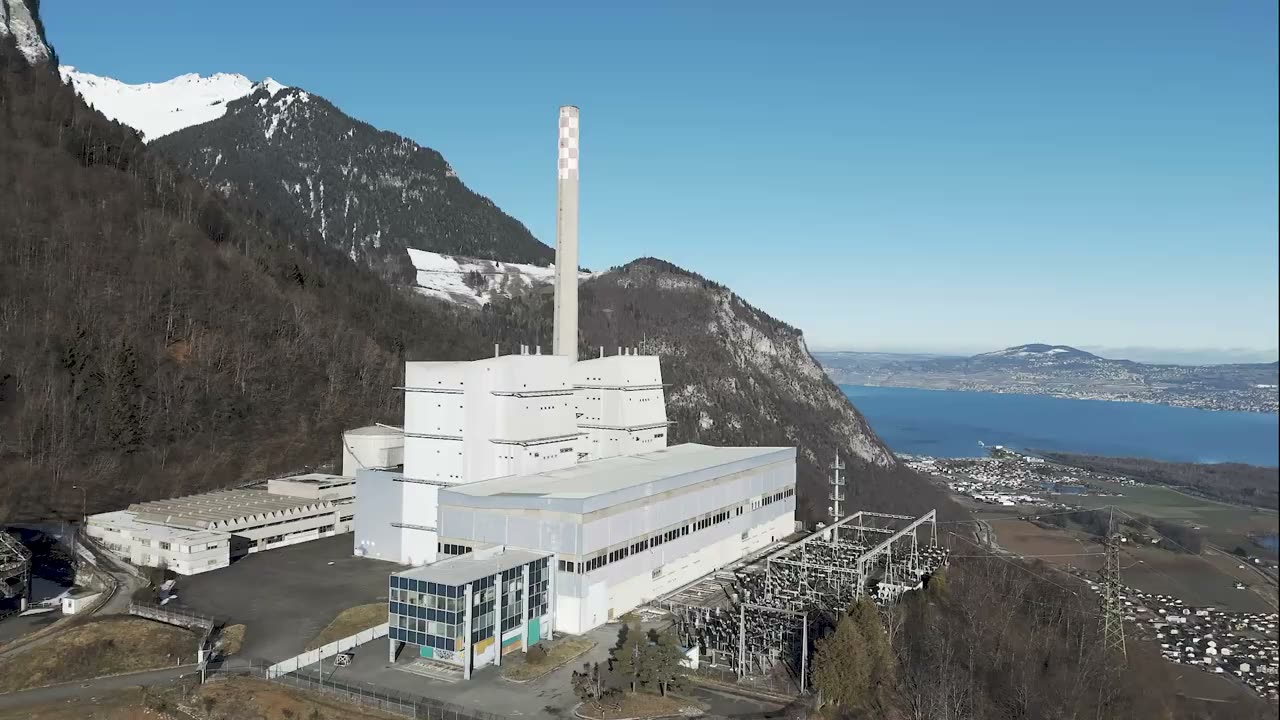
Propulsion - Villeneuve, CH
The position
- Crew
- Propulsion
- Location
- Villeneuve, CH
- Type of contract
- Master Thesis
Your role
PAVE Space is building LYOBA, a heavy kick stage moving up to 4-tonne payloads from LEO to high-energy orbits in under 24 hours.
Tank material selection is one of the many challenges that feeds directly into our structural design. Before we get there, we need quantitative compatibility data for every candidate alloy, surface treatment, and coating under consideration. The test stand is built, the HTP is sourced, and the test campaign kicks off this summer. We need the person who owns it.
You will own
A literature review that maps the landscape: HTP-compatible materials, surface treatments, passivation routes, and coatings relevant to propellant tanks.
Test campaign planning and execution on our dedicated compatibility stand, including writing your own procedures and identifying hardware upgrades where needed.
Decomposition rate measurements across candidate materials, temperatures, surface-to-volume ratios, and surface finishes.
Post-exposure assessment: material degradation and HTP contamination, determining whether the propellant remains usable for propulsion.
Compatibility reports with numbers that feed straight into design trade-offs.
What we are looking for
MSc student in Materials Science, Chemical Engineering, Chemistry, Mechanical Engineering, or Aerospace Engineering.
Solid grounding in corrosion, surface chemistry, or material degradation: coursework counts, lab work counts more.
You've run your own experiments before: planning, execution, analysis, not just following a script.
Comfortable handling concentrated chemicals in a lab environment.
Rigorous and methodical; your data speaks for itself because your process is clean.
Nice to have: experience with hydrogen peroxide or concentrated oxidizers, familiarity with passivation or surface treatment processes, metallurgy of aluminium alloys or stainless steels, proficiency with Python or MATLAB for data reduction.
You will fit if
You want your thesis to matter beyond the grade: to end up in a design decision, not a drawer.
You're autonomous enough to define what to test next, not just execute what's handed to you.
You're comfortable in a lab with hazardous chemicals and long-running experiments that require patience and precision.
You'd rather work inside a team shipping hardware than alone in an academic silo.
This is a confidential thesis, fully on-site in Villeneuve (VD), because the lab and the team are here. You'll need to find your own academic supervisor. The work is early-stage: some procedures will be yours to write from scratch. What makes that worth it: your measurements will directly determine what material ends up on a flight vehicle. Twenty-five weeks from blank test matrix to a recommendation that shapes real hardware, surrounded by engineers building the most ambitious space programme in Switzerland.
We are building to ship, grounded on real hardware, real funding, real milestones. Apply to contribute, or forward this to the thesis candidate who'd thrive here.